

India and Russia are in advanced talks on a critical minerals agreement.
2026-05-18
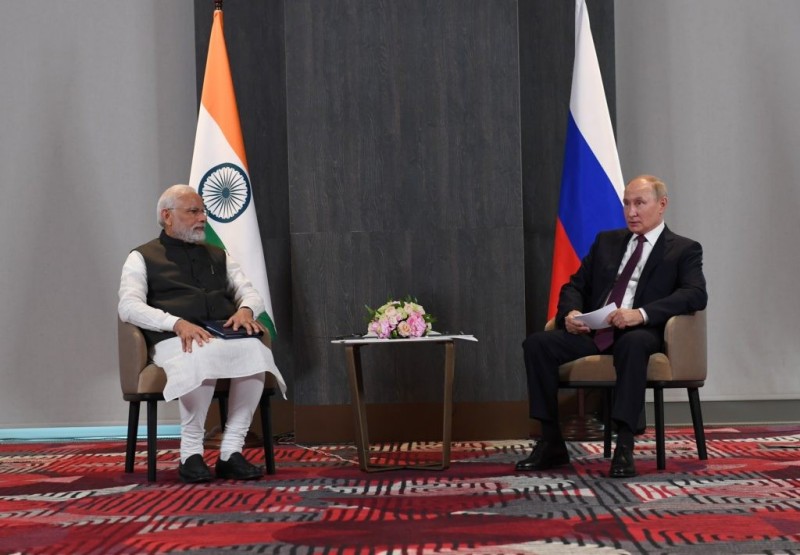
Prime Minister of India Shri Narendra Modi and Russian President Vladimir Putin. Source: MEAphotogallery | Flickr, licensed under CC BY-NC-ND 2.0.
India and Russia are in advanced stages of negotiations to sign a preliminary critical minerals agreement covering exploration, processing and technology cooperation, according to two sources familiar with the matter.
The deal is expected to focus on lithium and rare earths, the people said, speaking on condition of anonymity because the discussions are private; the governments of both countries also intend to promote corporate investment in this area.
According to them, the agreement could be signed within two months.
“We have handed over the draft of the proposed agreement to our Russian colleagues,” one of the sources said.
India's Ministry of Mines, which is leading negotiations with the Russian side, did not respond to a Reuters request for comment. The Russian Ministry of Industry and Trade, as well as the office of First Deputy Prime Minister Denis Manturov, also did not respond to requests for comment.
India is seeking to reduce its dependence on China—which dominates the global supply of several key minerals and has advanced mining and processing technologies—and secure new overseas sources of supply to support its energy transition and infrastructure development.
New Delhi has already signed critical minerals agreements with Argentina, Australia and Japan, and is also negotiating broader bilateral agreements with Peru and Chile to cover these resources.
However, India's progress in accessing critical mineral assets overseas remains limited, with only one lithium exploration and production project agreement to date covering five sites in Argentina (signed in 2024).
India may also return to consideration of Russian state corporation Rosatom's lithium exploration project in Mali, provided the political situation in the West African country stabilizes, one of the sources said.
Earlier this year, Reuters reported that India pulled out of a lithium project in Mali over security concerns.
This year, New Delhi has signed a number of agreements with countries such as Germany, Brazil and Canada to expand access to technology and strengthen partnerships.
In 2023, the Government of India has listed more than 20 minerals (including lithium) as resources critical to the country's energy transition and meeting growing demand from the industrial and infrastructure sectors.